
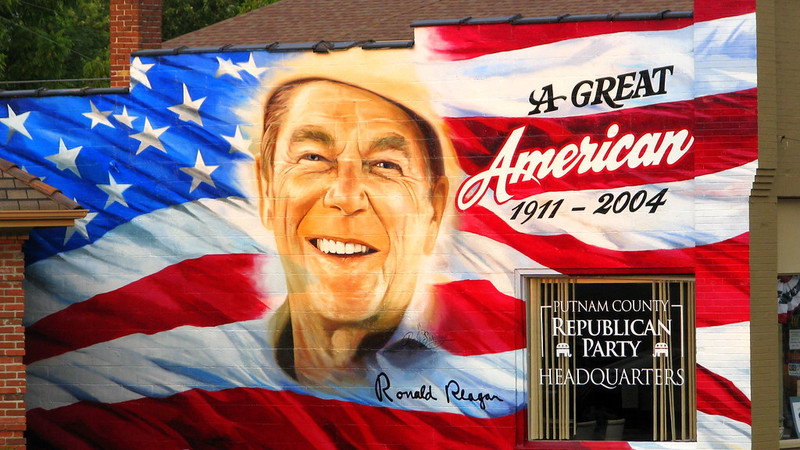
"Whenever you do that, you return to the atmosphere of violating the 11th commandment, which we originated in California, that you should speak no ill of another Republican." Ronald Reagan
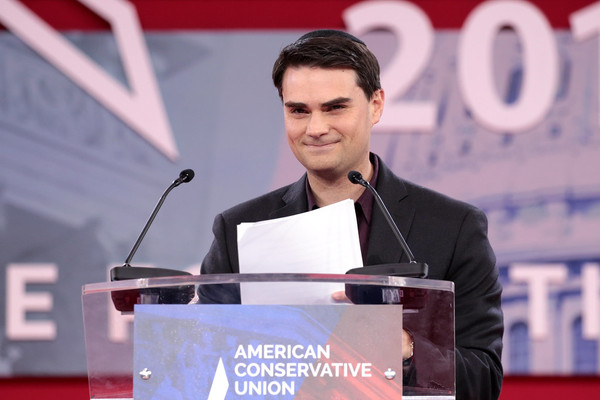
Based on Ben Shapiro's decade old, 2016 Slate interview critiquing Steve Bannon's willingness to "make common cause with the racist, anti-Semitic alt-right" for power, today's right-wing media landscape has evolved into something even more cynical. Tucker Carlson, Candace Owens, and the ever-present Bannon have completed a transformation that Shapiro warned about: they have abandoned the Reagan Revolution's core principles entirely, replacing them with a pseudo-populist isolationism that aligns with the Muslim Brotherhood's interests and creates a "darker uniparty" that threatens American conservatism at its foundation.
When Shapiro spoke with Slate in November 2016, he identified Bannon's defining characteristic as being "very, very power-hungry," willing to "use anybody and anything in order to get ahead." That assessment has proven prophetic. But where Bannon once weaponized the alt-right's anti-Semitic energy for political gain, today's iteration involves something more insidious: the Qatarification of American conservative discourse. The same figures who built careers positioning themselves as defenders of Western civilization against Islamic extremism now find themselves defending Qatar—a key financier of Hamas and long accused of supporting the Muslim Brotherhood—while increasingly hostile to Israel.
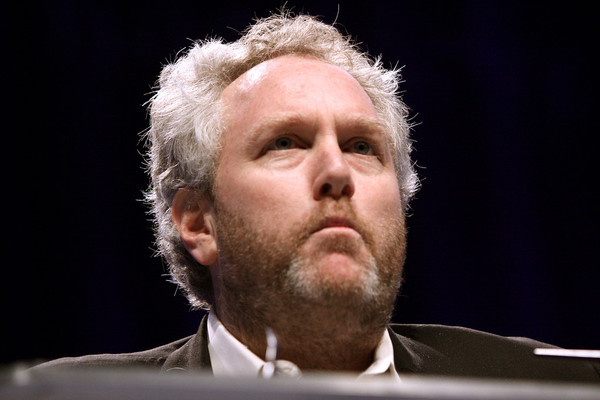
This willingness to instrumentalize anyone extends to the highest office in the land. Bannon saw in Donald Trump's presidency not a vessel for conservative governance but a blunt instrument for his own nationalist revolution—using Trump's populist appeal to push an agenda that the billionaire candidate himself barely understood, then turning on Trump the moment he failed to deliver the "economic nationalism" Bannon demanded. As Shapiro recognized in 2016, Bannon's loyalty extends only as far as utility; he shaped Breitbart into "Trump's personal Pravda" only to later condemn Trump himself when the former president failed to become the authoritarian strongman Bannon's vision required.
Consider the evidence. Tucker Carlson's widely criticized interview with Qatar's Prime Minister, where he appeared to accept uncritically Doha's narrative about its Gaza funding, represents a stunning reversal. This is the same Tucker Carlson who once railed against Islamic immigration but now platforms figures who echo Muslim Brotherhood talking points about Israeli aggression. Similarly, Candace Owens—who departed from The Daily Wire after increasingly strident anti-Israel commentary—has pivoted toward a rhetoric that positions Hamas's primary benefactor as more credible than America's democratic ally. These aren't policy evolutions; they're calculated repositioning to capture an audience that has been systematically radicalized against the post-Reagan consensus.

This represents a fundamental betrayal of the Reagan Revolution's foreign policy architecture. Reagan built the modern conservative movement on three pillars: muscular anti-communism, international engagement, and unwavering support for Israel as the only democracy in the Middle East. The "Reagan Doctrine" held that American power should be deployed to support freedom fighters against totalitarian regimes. Today's alt-right contingent—Carlson, Owens, Bannon—has inverted every element. They champion isolationism, embrace authoritarian "strongmen" in the Middle East, and increasingly view Israel through the lens of "Christian nationalist" theology that ultimately seeks a "Christian state of Jerusalem," as Bannon recently proposed, rather than supporting Jewish sovereignty.
This extremist realignment extends well beyond Bannon's circle into the darkest corners of right-wing media, now mainstreamed by platforms thirsty for engagement.
Nick Fuentes, the white nationalist who has called Adolf Hitler "really fucking cool" and compared the Holocaust to "the baking of cookies," was granted a friendly platform by Tucker Carlson—an interview so incendiary it "splintered the conservative movement" and led to Carlson being named a finalist for "Antisemite of the Year." Fuentes's fixation on Israel isn't rooted in concern for Palestinian suffering but in his belief that "Jews are responsible for most of society's problems," yet his rhetoric now echoes through mainstream conservative discourse.
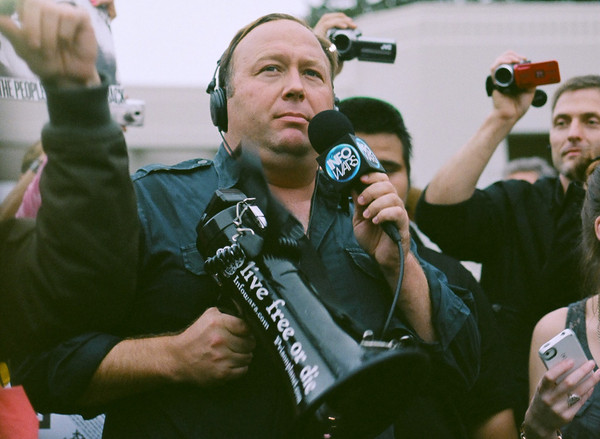
Alex Jones, whose InfoWars operation has long trafficked in conspiracy theories, has gone even further, claiming that "Netanyahu runs Hamas" and declaring Israel's defensive actions "mass genocide"—positions that would have been disqualifying in the Reagan era but are now amplified by Elon Musk's X platform.
The Reagan Revolution's moral clarity—its rejection of both racial hatred and conspiracy-addled isolationism—has been replaced by a nihilistic ecosystem, that Dan Bongino calls ‘Podcastistan’, where Fuentes, Jones, and Carlson share adjacent platforms while voices like Kelly are pushed to the margins, accused of being the real establishment shills for maintaining the pro-Israel stance that was once conservative orthodoxy.
The irony is thick. Bannon, who calls himself a "Catholic nationalist," spent years claiming to fight "globalism." Yet his proposed "three-state solution"—creating a Christian state alongside Israel and Palestine—represents exactly the kind of utopian foreign interventionism conservatives once mocked in neoconservatives. The difference is that traditional neoconservatives at least supported Israel's existence; Bannon's vision, which requires dismantling Israeli control over Jerusalem, aligns with the Muslim Brotherhood's long-term goal of eliminating Jewish sovereignty in the Holy Land entirely.
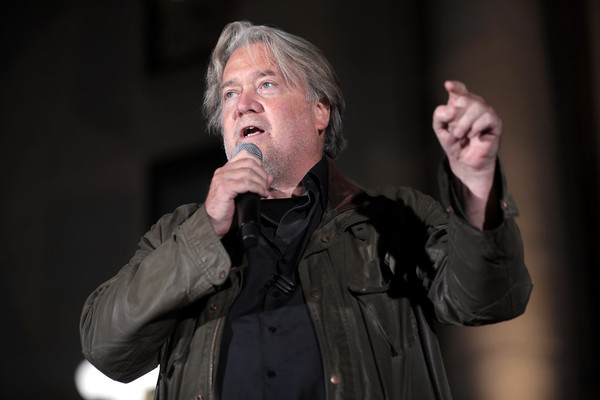
Tucker Carlson has developed a significant following in the Middle East, with his interviews and content, including those featuring Qatari officials, translated and circulating in the region. Local media outlets like Doha News and Doha Forum have featured him.
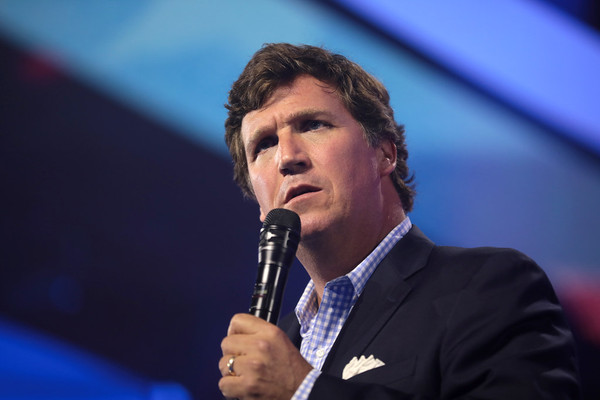
This creates the "darker uniparty" referenced in the question. Where the traditional criticism of the uniparty suggested that Republicans and Democrats were indistinguishable on economic or foreign policy, this new formation unites the populist right with the anti-imperialist left—both aligning against Israel, both platforming Hamas apologists, both increasingly hostile to Jewish influence in American politics. A "Christian nationalist" movement that finds common cause with the Muslim Brotherhood against Jewish self-determination isn't a conservative movement at all—it's a reactionary populist coalition united by opposition to liberal democracy itself.
The Reagan Revolution succeeded because it offered a coherent alternative to liberal internationalism: strong alliances with fellow democracies, moral clarity about the evil of totalitarianism, and the confidence to engage the world rather than retreat from it. What Carlson, Owens, and Bannon offer instead is a nihilistic politics of grievance that finds itself strangely aligned with Qatar's foreign policy objectives—the same Qatar that funds Al Jazeera, the Muslim Brotherhood's most effective media mouthpiece.
Shapiro correctly diagnosed Bannon's pathology in 2016: an opportunist willing to ally with any faction, however odious, to accumulate power. What we're witnessing now is the logical endpoint of that pathology. When you define yourself solely by opposition to "the establishment"—including the bipartisan consensus on American global leadership and Israeli security—you eventually find yourself platforming that establishment's enemies, regardless of whether those enemies are democrats or Islamists.
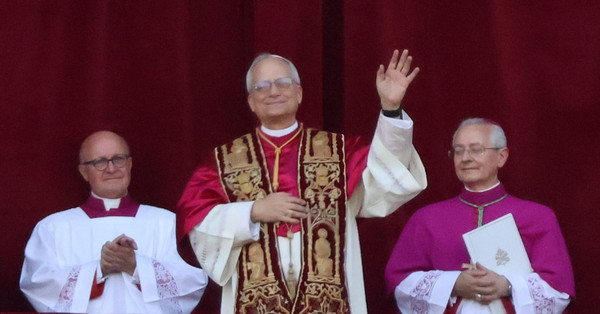
The irony of this supposed "Catholic nationalist" movement becomes even more apparent when measured against the actual teachings of the Church these figures claim to champion. Candace Owens, who converted to Catholicism in April 2024 at a Latin Mass community and was promptly awarded the "Joan of Arc Award" by conservative Catholic groups, has embraced a tradition increasingly defined not by papal authority but by opposition to it. Meanwhile, Steve Banno*, the self-described "Catholic nationalist," has reportedly told European populist leaders that Pope Francis "is the enemy" and aligned himself with Vatican hard-liners who oppose the pontiff. This schism reveals the hollowness of their Catholic branding: Pope Francis has fiercely rebuked "trickle-down" economics, condemned the "idolatry of money," and urged Western nations to welcome migrants—declaring that "a person who thinks only about building walls and not building bridges is not Christian." Yet Bannon and Owens champion precisely the restrictive immigration policies and economic nationalism that Francis explicitly rejects. Rather than submitting to the Church's social doctrine—which aligns more with Reagan-era Republicans like the USCCB's letters on immigrants—they've constructed a cafeteria Catholicism that keeps the aesthetic tradition while discarding the pope's authority on the very issues where Catholic teaching conflicts with their populist agenda. This selective obedience exposes their "Catholic nationalism" as yet another costume in the theater of the alt-right, one that invokes religious gravitas while undermining the faith's actual teachings on solidarity, migration, and economic justice.
The Reagan Revolution asked Americans to believe in something: freedom, democracy, and the Judeo-Christian Western tradition. The new "alt-right" asks Americans only to hate: hate the media, hate the "globalists," hate Israel, hate the bipartisan foreign policy consensus. In embracing Qatar's narrative and the Muslim Brotherhood's framing of the Israeli-Palestinian conflict, Carlson, Owens, and Bannon haven't just abandoned conservatism—they've placed themselves in service of forces that seek the West's destruction.
Shapiro warned us in 2016 that Bannon was "willing to use anybody and anything." Today, Bannon—and his media progeny—are being used in turn, as useful idiots for an influence campaign that serves authoritarian interests. The Reagan Revolution is indeed being destroyed, replaced not by a new conservative vision but by a dark uniparty of popular fronts, authoritarian sympathies, and political nihilism…and greed. True conservatives must recognize this transformation for what it is: not a renovation of the movement, but its hijacking by those who never believed in its principles to begin with.
Editorial comments expressed in this column are the sole opinion of the writer
